
Umrah Tips
Everything You Need to Know Before Your Umrah Journey (Shia Guide)
Preparing for Umrah is more than just booking a trip.
It is preparing your heart, your mind, and your actions.
Whether it is your first time or you have been before, taking the time to understand the journey properly can completely change your experience.
This guide covers spiritual readiness, essential documents and packing, and a clear step-by-step outline of Umrah according to Shia jurisprudence, including Tawaf al-Nisa.
One important reminder
Imam Jafar al-Sadiq said: Complete your Hajj and Umrah as Allah has commanded (Al-Kafi, Vol. 4, Book of Hajj).
This is a simple but powerful reminder: Umrah is not just about going. It is about doing it the right way.
Key considerations
Preparation works on two levels simultaneously: the inner and the outer. Both matter equally.
- •Spiritual preparation: Begin weeks in advance. Increase your prayers, engage in tawbah (repentance), and set a sincere, clear intention (niyyah)
- •Physical preparation: There is a great deal of walking on uneven surfaces and in heat. Build your stamina and ensure you are in sound health before traveling
- •Documentation: Double-check passport validity, visa, and all required papers well in advance, not the week before departure
- •Packing: Keep it simple and purposeful. Avoid unnecessary weight
Before travel: Essentials checklist
Use this as a starting reference and adjust according to your scholar's rulings and airline restrictions.
- •Ihram clothing in the form specified by your marja
- •Passport and visa, plus copies stored separately
- •Unscented toiletries appropriate for the state of Ihram
- •Personal medications with sufficient supply for the whole trip
- •A compact dua book you can carry comfortably
- •Turba for prostration on natural earth, as applicable to your practice
Step 1: Ihram at Miqat
Ihram is the sacred state of consecration entered at the prescribed miqat for your travel route. Follow your marja's detailed guidance on clothing, the recommended prayers, and the form of talbiyah.
- •Perform ghusl at or before the miqat as recommended or required
- •Wear Ihram in the correct prescribed form
- •Make a clear, sincere niyyah specifically for Umrah al-Mufradah
- •Recite the Talbiyah as taught by your school of jurisprudence
Step 2: Tawaf
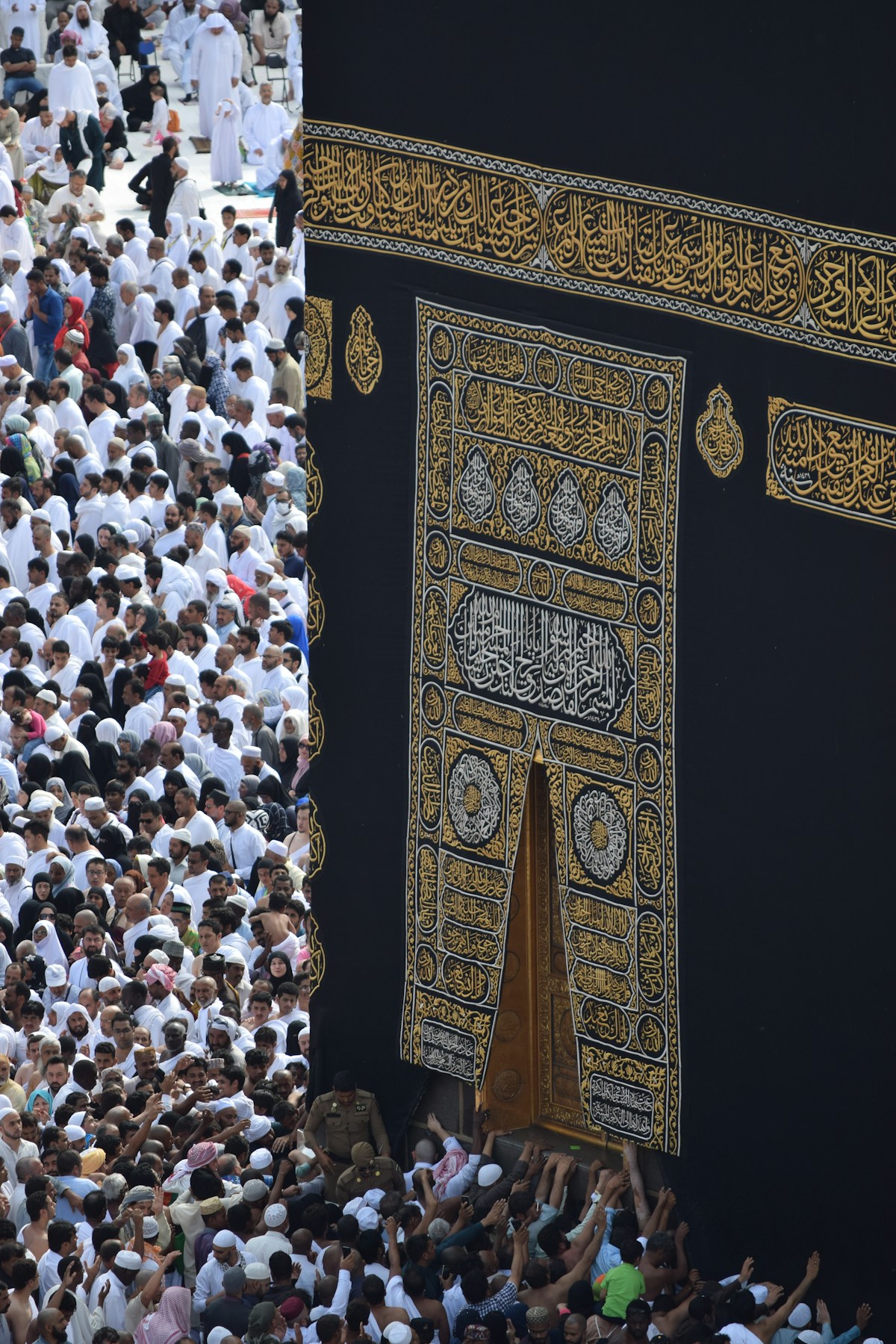
Perform seven complete circuits around the Kaaba, beginning and ending at the Black Stone (Hajar al-Aswad). Maintain wudhu throughout and focus on the spiritual significance of each round.
- •Complete seven full circuits with the correct starting and ending point
- •Maintain wudhu as required throughout
- •Stay calm and measured (avoid unnecessary rushing in crowded conditions)
Step 3: Salat al-Tawaf
After completing Tawaf, perform the two rakahs of Salat al-Tawaf, ideally behind Maqam Ibrahim when the crowd allows, or anywhere in the Masjid al-Haram. This prayer is obligatory in the Umrah sequence.
Step 4: Sai between Safa and Marwah
Walk seven times between the hills of Safa and Marwah, starting at Safa and ending at Marwah. Recite the appropriate dua at each point as per your marja's guidance.
Step 5: Taqsir
After Sai, perform taqsir: cut a small portion of hair from your head (for men and women as specified by your school of jurisprudence). This act marks the release from the state of Ihram for Umrah al-Mufradah.
Step 6: Tawaf al-Nisa
In Shia jurisprudence, Tawaf al-Nisa is obligatory for Umrah al-Mufradah. After taqsir, perform another seven circuits around the Kaaba with the same conditions as the first Tawaf.
Skipping this step is a significant error. Confirm all details with your marja.
Step 7: Salat of Tawaf al-Nisa
Complete the sequence with the two rakahs of Salat of Tawaf al-Nisa, performed after the seventh circuit. With this prayer, the complete sequence of Umrah al-Mufradah in Shia jurisprudence is fulfilled.
Always consult a qualified scholar for questions about specific circumstances: illness, inability to complete certain acts, or situations not covered by general guidance.
Practical tips for the journey
Knowledge and preparation before you arrive frees your attention for the worship itself.
- •Learn all steps and the key duas before you depart (do not be learning from scratch in the Haram)
- •Be patient in crowds and with your own pace
- •Carry a compact dua book for reference
- •Stay well hydrated, especially in warm months
- •Keep document copies separate from originals
- •Learn basic Arabic phrases for common needs and courtesy
Common mistakes to avoid
Most errors come from insufficient preparation or approaching Umrah too casually.
- •Skipping Tawaf al-Nisa or its obligatory prayer (in Shia fiqh, this invalidates the completion of Umrah)
- •Forgetting Salat al-Tawaf after the first Tawaf
- •Not learning the steps and sequence beforehand
- •Treating Umrah like ordinary tourism (missing the adab and spiritual focus required)
Conclusion
For many, Umrah is a once-in-a-lifetime journey. Prepare well, follow your marja's rulings carefully, and keep your heart present in every step. May your Umrah be accepted and full of blessings.